
Track stock trades with catalysts and chart screenshots.
Stock market journal
Last updated July 26, 2026
Stock market journal for active traders and investors
A stock market journal helps traders review the decision behind each ticker. Jurnl-It keeps stock trades, catalysts, screenshots, setup labels, P/L, risk notes, and process lessons together for cleaner review.
Stock traders and active investors who want to review decisions, catalysts, entries, exits, and results.
Review P/L beside setup quality and risk decisions.
Build a history of what works across stock market conditions.
Real product screenshots
See how the journal looks when review data is connected
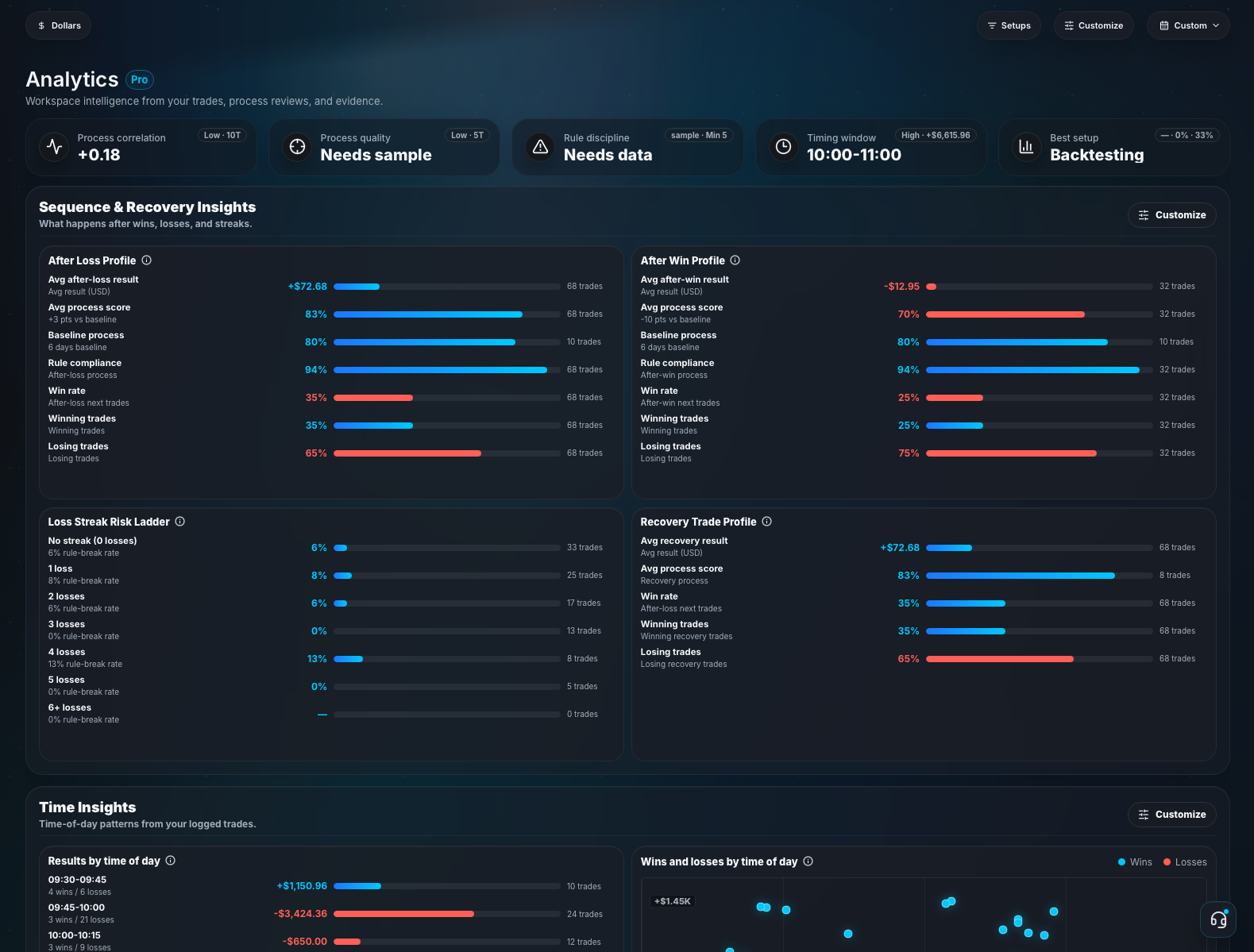
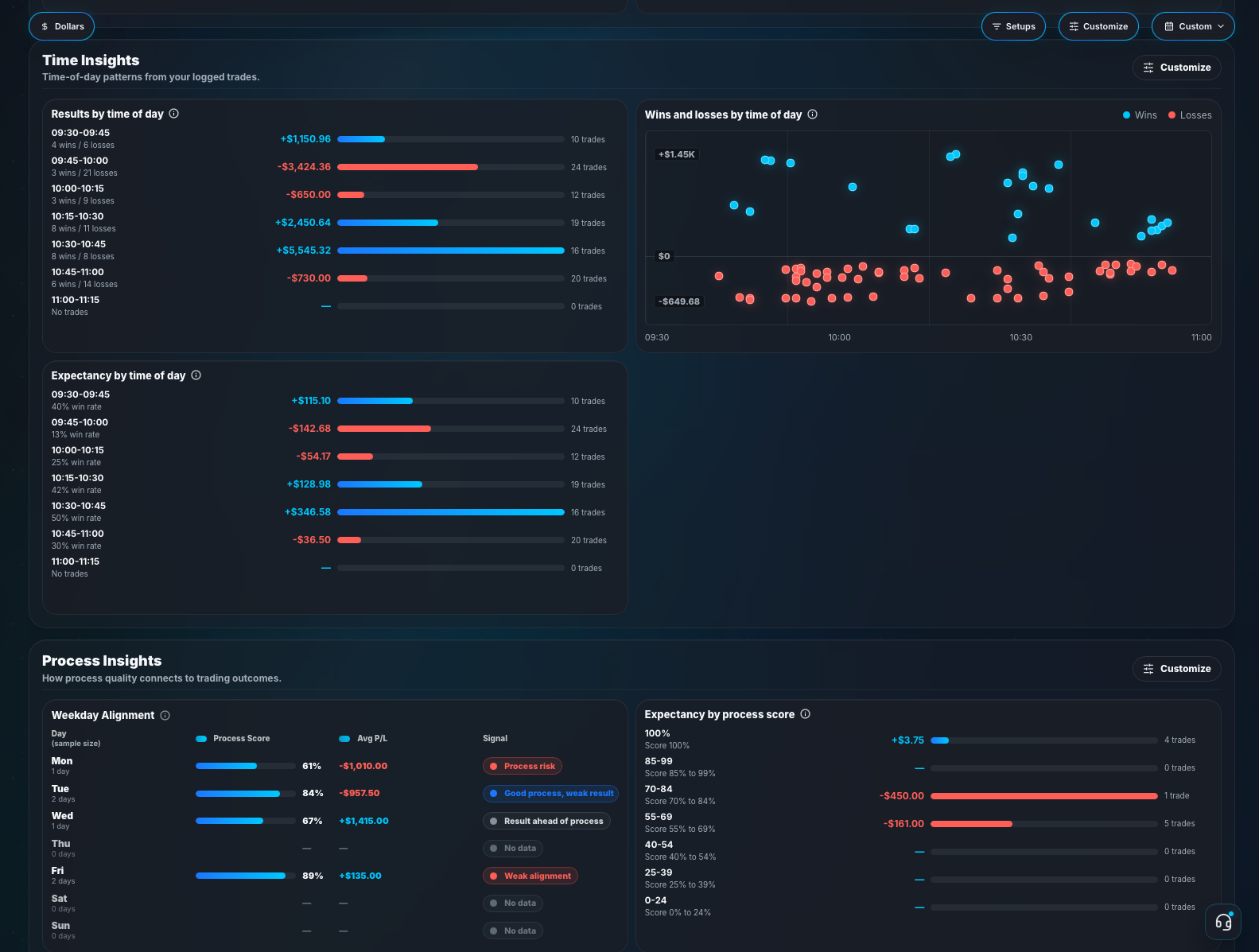
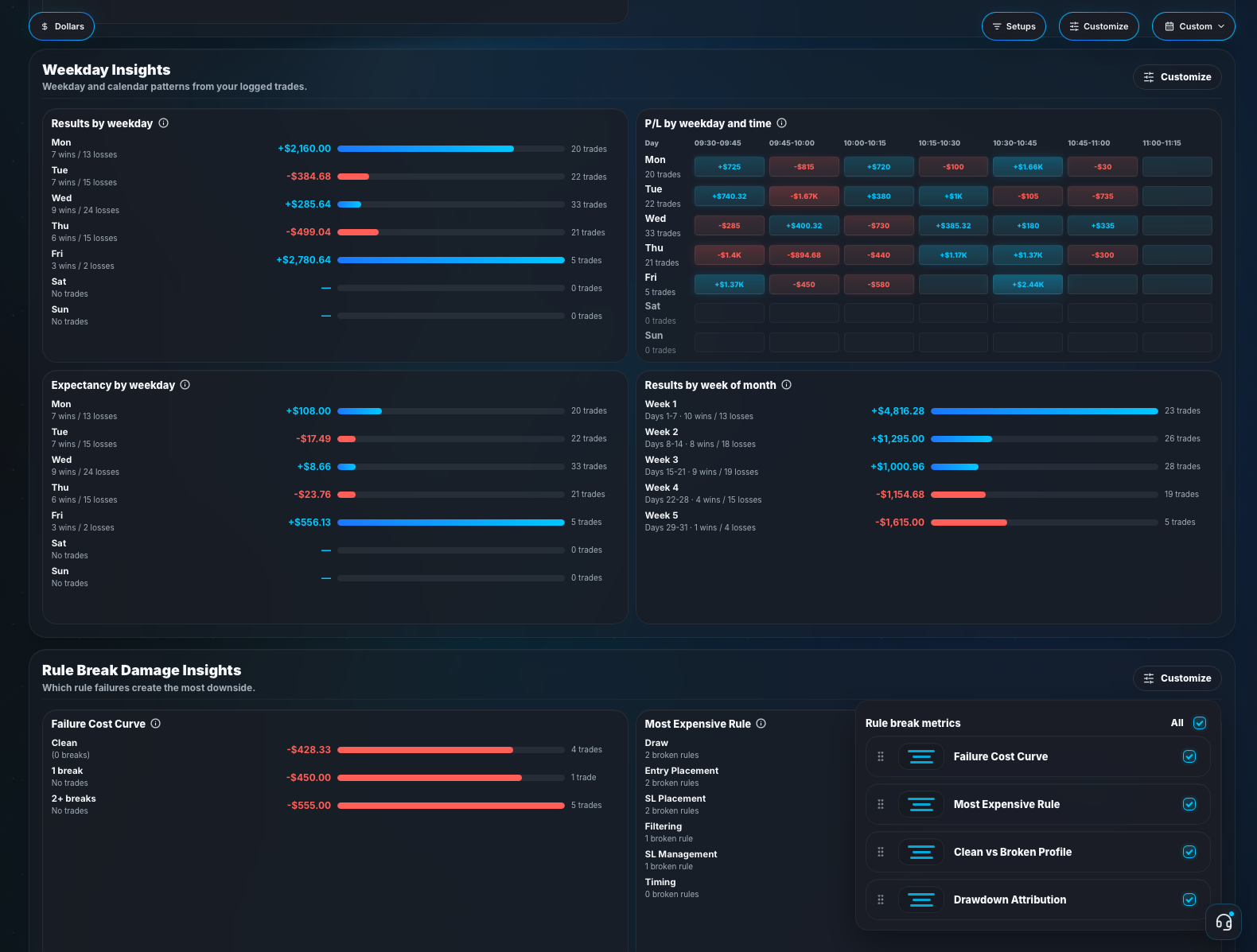
These are real Jurnl-It product screens using approved journal data, selected to show the workflow most relevant to this guide. The visible figures illustrate the interface, not typical trading outcomes.
Product proof deep dive
See the review evidence Jurnl-It is built to capture
The pages in this sitemap are not just keyword targets. They are tied to a concrete journal workflow: capture the trade, preserve the context, score the process, and turn the review into a next action.
Demo journal entryStocks / NVDASynthetic example, not financial advice
- Setup
- Breakout retest
- Result
- +1.6R
- Discipline score
- 8/10
Entry followed the setup, risk stayed fixed, screenshot showed the retest, and the exit respected the plan.
Review lesson: Repeat the retest checklist, but avoid taking the same setup when the stop distance is too wide.
Fields that make a trade reviewable
MarketSymbolSidePosition sizeEntryExitPlanned riskP/LSetup tagScreenshotDiscipline scoreReview lesson
Analytics example
Discipline score correlation for this setup
Synthetic sample of 128 trades filtered to Breakout retest on Tuesday, grouped by time of day. The highlighted expectancy column matches the demo entry interval: 10:00-11:30 AM ET.
Discipline score is customizable: you can measure any trading behavior you care about. We recommend starting with setup quality, risk control, entry discipline, exit discipline, and emotional control.
8/10Demo entry discipline scoreMaps to Score 8-10
| Discipline threshold | Trades | Expectancy 9:30-10:00 | Expectancy 10:00-11:30 | Expectancy 11:30-1:00 | Expectancy 2:00-3:30 | Win rate | Review read |
|---|---|---|---|---|---|---|---|
| Score 8-10 | 52 | +0.22R | +2.12R | -0.04R | +0.76R | 58% | Best expectancy; trades followed setup, risk, and exit rules most closely. |
| Score 6-7 | 43 | +0.05R | +0.08R | -0.18R | +0.02R | 49% | Positive but thin; usually one process issue such as late entry or early exit. |
| Score 0-5 | 33 | -0.29R | -0.31R | -0.42R | -0.21R | 22% | Negative expectancy; most trades broke risk, patience, or setup-quality rules. |
Higher discipline scores correlate with better expectancy when the same setup is reviewed by weekday and intraday interval in the demo sample.
Trade data, setup labels, screenshots, notes, planned risk, actual result, and discipline score live in the same review record.
A stock market journal page should prove the journal records the decision context, not only the final P/L.
The workflow separates outcome, execution quality, discipline, risk control, and the lesson for the next session.
This helps traders compare good losses, weak winners, repeated mistakes, and setups that deserve more review.
Insights can connect P/L, win rate, setup performance, risk notes, screenshots, and process patterns.
Searchers looking for tracking, finance, stock market, or investment review tools need evidence that the app turns records into decisions.
Journal the catalyst and the chart
Stock market trades often start with news, earnings, momentum, support, resistance, or a setup. Capture the reason so the trade can be reviewed properly.
Separate trading from investing decisions
Use clear notes for short-term trades, swing trades, and longer-term position decisions so your review does not mix different strategies together.
Review results by setup and market condition
A stock market journal helps compare breakouts, pullbacks, reversals, earnings trades, and other patterns across changing market regimes.
Review stock market journal with risk context
A useful stock market journal page should connect the visible result to planned risk, position context, rule adherence, and the lesson from the review. Jurnl-It keeps those inputs together so the page supports a real trader workflow instead of a generic definition. The goal is not to predict the next trade; it is to make the previous decision clear enough to learn from.
Connect the page to the wider review system
Use this workflow with trade notes, screenshots, setup tags, discipline scores, and weekly analytics so each page points toward the same habit: capture the decision, review the process, and choose one next action. Internal links between journal, checklist, analytics, and template pages help traders move from reading to reviewing.
Measure expectancy without hiding decision quality
A stock market journal workflow should make expectancy, win rate, P/L, setup quality, and risk decisions easier to compare without turning any one metric into the full story. Jurnl-It separates outcome review from process review so traders can study whether a result came from repeatable execution, oversized risk, emotional trading, or a rule that needs to change.
Turn lessons into one specific rule
The most useful review pages end with a specific behavior change. That could mean reducing size after a rule break, avoiding a weak setup, adding a pre-entry checklist item, saving a chart example, or repeating the condition that produced clean execution. This keeps SEO content tied to the actual product habit.
Include psychology and review cadence
Strong stock market journal content should also name the emotional and timing patterns that affect trading decisions: hesitation, FOMO, revenge trades, overconfidence after wins, and rushed exits after losses. A weekly review cadence gives those patterns a place to surface, so the trader can compare behavior across sessions instead of reacting to one isolated trade.
Product proof
What Jurnl-It gives traders to review better
These are the concrete review inputs that make a journal useful: trade data, context, screenshots, discipline notes, and insights that point back to real decisions.
Every review starts with the reason for the trade
For stock market journal, Jurnl-It keeps the setup, planned risk, notes, and result together so the review can explain why the decision happened.
Process quality stays visible beside P/L
A green day can still contain weak process, and a red day can contain good execution. The journal keeps those signals separate enough to study.
Lessons become the next action
Each page points back to a repeatable loop: capture evidence, score discipline, compare patterns, and choose one rule or setup adjustment.
Built for self-review instead of trade calls
Jurnl-It is designed around private journaling, screenshots, notes, and analytics so traders can review their own decisions without turning the workspace into advice.
Review workflow
A journal should change what happens next
Capture the trade context
Use stock market journal with the market, setup, thesis, planned risk, and notes that explain the decision before hindsight changes the story.
Score the process
Review rule adherence, emotional control, risk management, entry quality, exit quality, and whether the trade followed the plan.
Compare the pattern
Study the page alongside related journal workflows so setup quality, screenshots, P/L, win rate, and review notes point to the same lesson.
Built for review, not trade signals
Jurnl-It focuses on trading review workflows and does not provide trade signals or financial advice.
Risk, discipline, process quality, and review consistency are treated as separate signals from profit and loss.
stock market journal guidance is framed around private self-review, not public trade calls or guaranteed outcomes.
Comparison and alternative pages are written for workflow fit and are not endorsements, guarantees, or affiliation claims.
Questions traders ask
Stock market journal FAQ
What should I track in a stock market journal?
Track ticker, date, setup, catalyst, entry, exit, size, risk, P/L, screenshots, notes, emotions, plan adherence, and review lessons.
Is a stock market journal investment advice?
No. A journal is a private review tool for your own decisions and process. It should not be treated as buy, sell, or hold advice.
How should I use stock market journal in Jurnl-It?
Use stock market journal as part of a review workflow: log the trade, attach the decision context, score process quality, and compare the result with related setups, risk notes, and lessons.
Topic hub
Build a complete trading journal system
Use these guides together to move from a single trade log into a complete review system for markets, workflows, templates, and alternatives.
Free journal tools
free trading journal appFree trading journal app for disciplined trade reviewtrading journalFree trading journal software for better trade reviewstrading journal appFree trading journal app for trades, notes, and analyticstrading journal templateFree trading journal template for structured trade reviewstrading discipline score templateFree trading discipline score templateTrade tracking
trade trackerTrade tracker for tracking trades, stocks, P/L, and reviewstrade notes appTrade notes app for screenshots, setups, and lessonstrade screenshot journalTrade screenshot journal for chart-based reviewbroker import trading journalBroker import trading journal for CSV and MT filesPerformance metrics
trading performance trackerTrading performance tracker for process and resultsP/L trackerP/L tracker for trading performance and reviewwin rate trackerWin rate tracker for trade review and analyticssetup tracking journalSetup tracking journal for repeatable trade reviewsRisk and discipline
trading discipline score templateFree trading discipline score templatetrading discipline checklistTrading discipline checklist for rule adherence reviewstrading rule adherenceTrading rule adherence tracker for process reviewstrading rule-break costTrading rule-break cost worksheet and review methodtrading risk management journalTrading risk management journal for better reviewtrading discipline journalTrading discipline journal for rules and process reviewtrading checklistTrading checklist for rules, risk, and reviewMarkets
day trading journalDay trading journal for fast review cyclesswing trading journalSwing trading journal for multi-day trade reviewsforex trading journalForex trading journal for currency tradersstock trading journalStock trading journal and trade tracker for reviewsStock market and investing
investment tracking journalInvestment tracking journal for decisions and reviewportfolio tracker journalPortfolio tracker journal for position decisionsstock portfolio journalStock portfolio journal for trades and position notesComparisons
trading journal spreadsheetTrading journal spreadsheet vs trading journal appTradeZella alternativeTradeZella alternative for process-first trade reviewsTraderSync alternativeTraderSync alternative for structured trading reviewsTradervue alternativeTradervue alternative for trade reviews and analyticsRelated trading journal guides
Stock trading journalStock trading journal and trade tracker for reviewsStock portfolio journalStock portfolio journal for trades and position notesInvestment tracking journalInvestment tracking journal for decisions and reviewDay trading journalDay trading journal for fast review cyclesForex trading journalForex trading journal for currency tradersOptions trading journalOptions trading journal for contracts, risk, and reviewFutures trading journalFutures trading journal for contracts and execution reviewCrypto trading journalCrypto trading journal for volatile markets